Effective SaaS Content Marketing: What You Need to Know?
Want to learn how to measure saas content marketing and develop an effective saas content marketing strategy? Read this guide to explore insights and examples today!
-
Key Highlights
- SaaS content marketing educates buyers, supports long sales cycles, and connects traffic directly to revenue.
- It must align with the full funnel: acquisition, activation, retention, and expansion.
- High-intent SEO, topic clusters, and product-led education drive qualified traffic and demo signups.
- Performance should be measured beyond traffic, focusing on conversions, pipeline influence, and customer lifetime value.
- Strong SaaS content integrates product positioning, social proof, and measurable outcomes.
- Many SaaS teams partner with specialized agencies to build scalable, revenue-driven content systems.
Most SaaS content fails for one reason: there is no strategy behind it. Teams publish blog posts consistently but see little pipeline impact, low conversion rates, and minimal revenue influence. Random publishing creates traffic without intent, content without positioning, and effort without measurable growth.
The cost is high. You burn budget on SEO that does not convert, attract unqualified visitors, extend sales cycles, and miss high-intent buyers actively evaluating solutions. Without a structured framework, content becomes a marketing expense instead of a revenue driver.
This guide gives you that framework. You will learn how to align SaaS content marketing with acquisition, activation, retention, and expansion, build intent-driven topic strategies, integrate product positioning naturally, measure revenue impact, and decide when investing in specialized SaaS content marketing services makes strategic sense.
What Is SaaS Content Marketing?
SaaS content marketing is a strategic approach where software companies create valuable, educational, and conversion-focused content to attract, nurture, and convert users into paying customers. It connects product positioning with user intent across the entire buyer journey.
SaaS content marketing typically includes:
- Blog articles targeting search intent and awareness stages.
- Case studies demonstrating measurable customer outcomes.
- Landing pages aligned with specific solution use cases.
- Product-led content showcasing features through real scenarios.
- Webinars educating prospects on industry challenges.
- Email sequences nurture leads across lifecycle stages.
- Whitepapers providing in-depth strategic insights.
- Content that consistently drives organic traffic.
The goal is not just traffic. It is revenue-driven education aligned with product value and buyer needs.
To learn how leading brands build credibility at scale, read: Which Companies Have Strong Reputations for Building Trust Through Social Proof in B2B Marketing?
Why SaaS Content Marketing Requires a Different Strategy?
SaaS companies operate on subscription-based revenue models where growth depends on recurring revenue, retention, and expansion rather than one-time transactions. Buying journeys are longer, research-driven, and involve multiple stakeholders.
Because of this complexity, SaaS content marketing must function as full-funnel revenue enablement rather than simple traffic generation.
McKinsey research finds B2B buyers now use an average of 10 interaction channels during the decision journey, making structured, multi-touch content essential for guiding buyers effectively.
Here is why SaaS content marketing demands a differentiated approach:
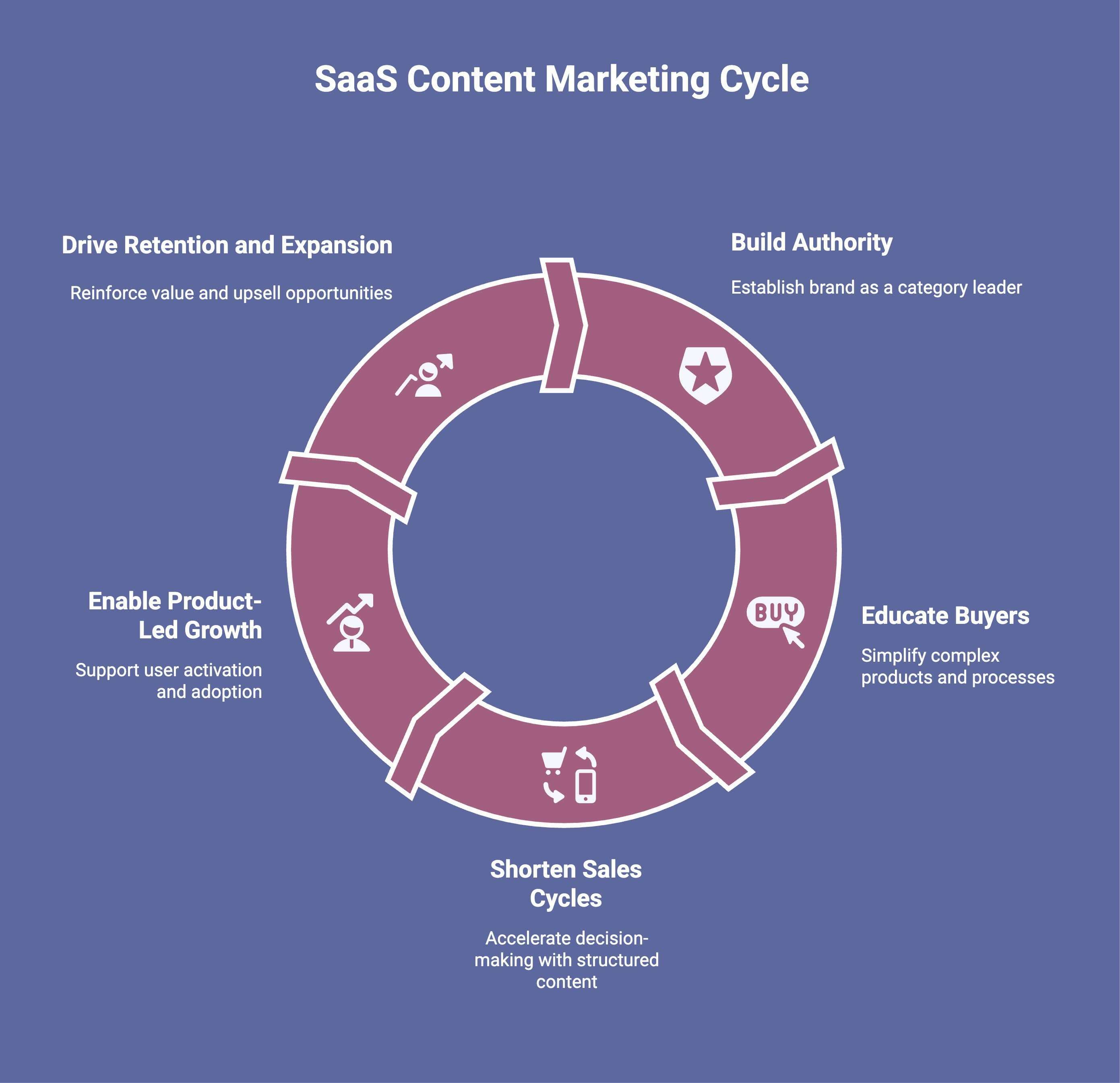
1. Builds Authority in Competitive Markets
SaaS markets are crowded and highly competitive. A strategic content program positions your brand as a category authority rather than just another vendor. Consistent, insight-driven publishing strengthens organic visibility, builds brand recall, and increases trust during high-stakes evaluation cycles.
2. Educates Buyers on Complex Products
SaaS solutions often involve integrations, workflows, compliance requirements, and long-term commitments. Content must simplify technical value propositions, address objections early, and guide prospects through layered decision-making processes. Education reduces friction before prospects ever speak to sales.
3. Shortens Multi-Stakeholder Sales Cycles
Enterprise and mid-market SaaS purchases involve decision-makers across departments. Well-structured content answers common concerns proactively, aligns internal stakeholders with shared information, and accelerates evaluation. Research from HubSpot highlights how educational resources influence modern B2B buying decisions.
McKinsey data shows that buyers increasingly expect seamless digital or remote experiences, reinforcing the need for comprehensive educational content throughout the journey.
4. Enables Product-Led Growth
In product-led SaaS models, content directly supports activation and adoption. Tutorials, onboarding guides, use cases, and feature walkthroughs help users experience value quickly. Faster value realization improves trial-to-paid conversions and increases long-term product engagement.
5. Drives Retention and Expansion
Retention fuels sustainable SaaS growth. Educational and expansion-focused content reinforces ongoing value, introduces advanced capabilities, and supports upsell or cross-sell opportunities. When measured against revenue impact, content becomes a predictable growth engine rather than a marketing expense.
According to Forbes-cited research, increasing customer retention by just 5% can boost profits by 25 %-95%, highlighting why content that supports retention and expansion delivers outsized financial impact.
In SaaS, content is not a marketing add-on. It is a strategic growth lever that directly influences acquisition, adoption, and recurring revenue performance.
Can You Give Me a Simple Step-by-Step Roadmap for SaaS Content Marketing?
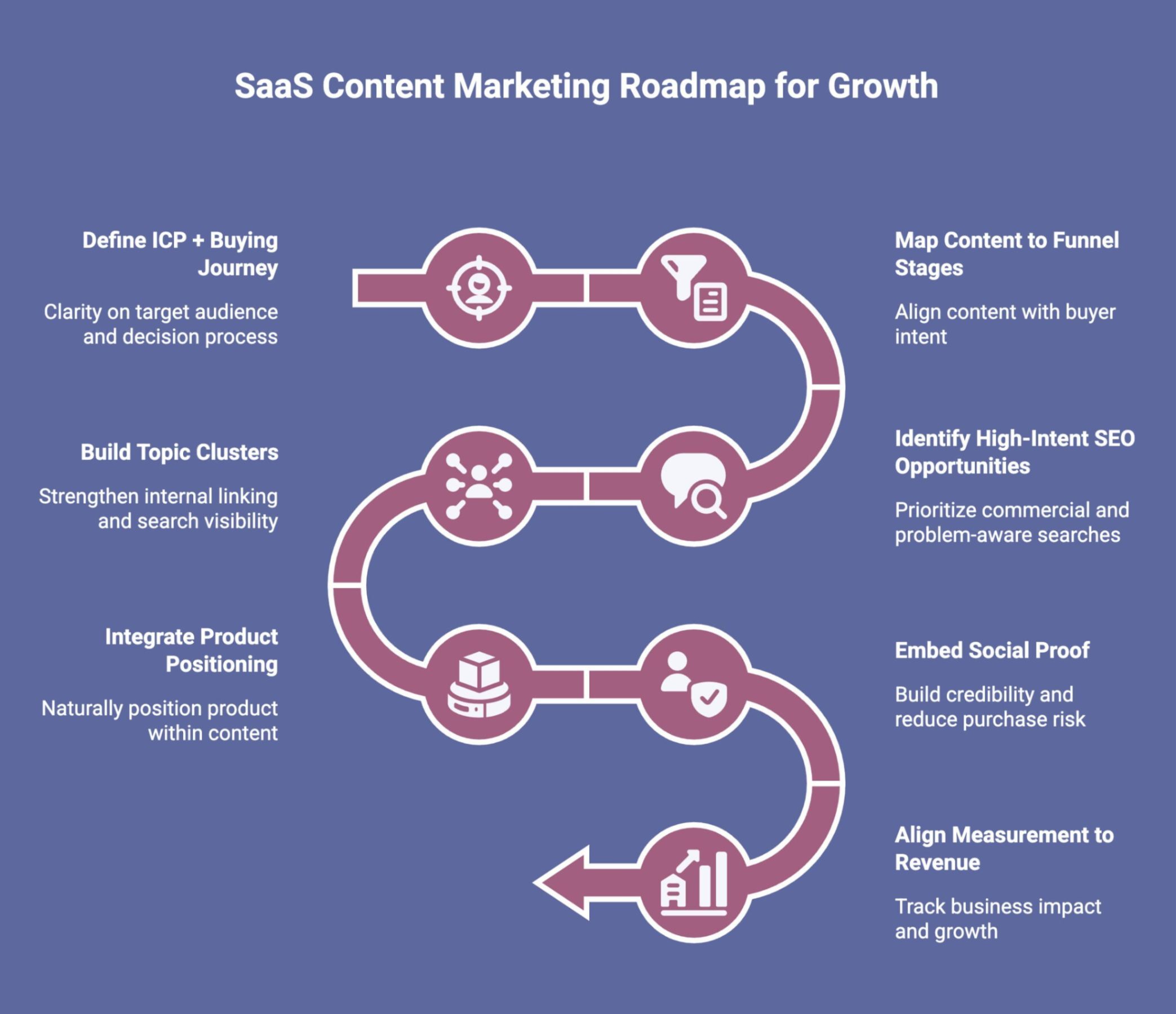
A successful SaaS content marketing strategy is not random publishing. It is structured, intent-driven, and aligned with revenue outcomes. This 7-step framework ensures every content asset supports acquisition, activation, expansion, and retention rather than just generating traffic.
1. Define ICP + Buying Journey
Every successful SaaS content strategy begins with clarity about who you are targeting and how they buy. Defining your Ideal Customer Profile and mapping their decision journey ensures your messaging aligns with real pain points, motivations, objections, and purchase triggers.
Then map the full buying journey:
- Awareness.
- Consideration.
- Decision.
- Post-purchase and retention.
Content must match buyer intent at each stage to move prospects closer to conversion.
2. Map Content to Funnel Stages
Content should not be created randomly or based on traffic potential alone. Mapping content to awareness, consideration, decision, and retention stages ensures each asset plays a defined role in guiding prospects toward conversion and long-term customer value.
Align content types to each funnel stage:
- Top of Funnel: Educational guides, thought leadership, industry insights
- Middle of Funnel: Use cases, comparison posts, solution deep dives
- Bottom of Funnel: Product-led content, alternatives pages, ROI breakdowns
- Retention: Feature updates, advanced workflows, expansion of use cases
This prevents traffic-heavy but revenue-light publishing.
3. Identify High-Intent SEO Opportunities
Not all traffic drives revenue. High-performing SaaS content prioritizes commercial and problem-aware search intent over broad informational keywords. Identifying high-intent SEO opportunities ensures your content attracts prospects actively researching solutions and are closer to making purchase decisions.
Prioritize commercial and problem-aware searches over vanity keywords. Focus on:
- Comparison keywords.
- Alternative pages.
- Use-case searches.
- Feature-based queries.
- Industry-specific solution terms.
Search intent alignment is the backbone of SaaS SEO performance.
4. Build Topic Clusters
Authority is built through structure, not scattered publishing. Developing topic clusters around strategic pillars strengthens internal linking, improves search visibility, and positions your brand as a comprehensive solution provider within a defined problem space or category.
Move from isolated posts to structured authority building.
Create:
- A core pillar page around a major theme.
- Supporting cluster articles.
- Strategic internal linking.
For example, a pillar on onboarding automation can link to posts covering tools, KPIs, workflows, and churn reduction strategies.
5. Integrate Product Positioning
Educational content builds trust, but strategic product positioning drives revenue. Integrating your solution naturally within valuable content allows prospects to connect their challenges with your product capabilities without feeling pressured by overt promotional messaging. SaaS content should educate first and position the product naturally.
Use:
- Screenshots.
- Workflow examples.
- Feature breakdowns.
- Short demo clips.
- Integration explanations.
Bridge value-driven education with solution visibility without sounding overly promotional.
6. Embed Social Proof
Trust significantly influences SaaS buying decisions. Embedding testimonials, case studies, quantified outcomes, and validation from platforms like G2 and Capterra strengthens credibility and reduces perceived purchase risk. Trust accelerates decisions.
Integrate:
- Testimonials.
- Case studies.
- Quantifiable results.
- Third-party reviews from platforms like G2 and Capterra.
Credibility signals reduce friction and strengthen buying confidence.
7. Align Measurement to Revenue
Content performance should be evaluated through business impact, not vanity metrics. Aligning measurement with pipeline contribution, conversions, and revenue influence ensures your SaaS content marketing program directly supports growth objectives and justifies long-term investment decisions.
Track metrics beyond traffic:
- Pipeline contribution.
- SQL generation.
- Conversion rates by funnel stage.
- Customer acquisition cost.
- Revenue that’s influenced by content.
Content becomes a revenue engine when measurement aligns with business growth, not just pageviews.
When executed systematically, this 7-step framework transforms SaaS content marketing from a publishing routine into a predictable, scalable growth channel.
Looking for real examples of social proof that turn hesitation into action? Check out: Social Proof Examples That Push Visitors From Browsing to Buying
How to Measure SaaS Content Marketing Step by Step?
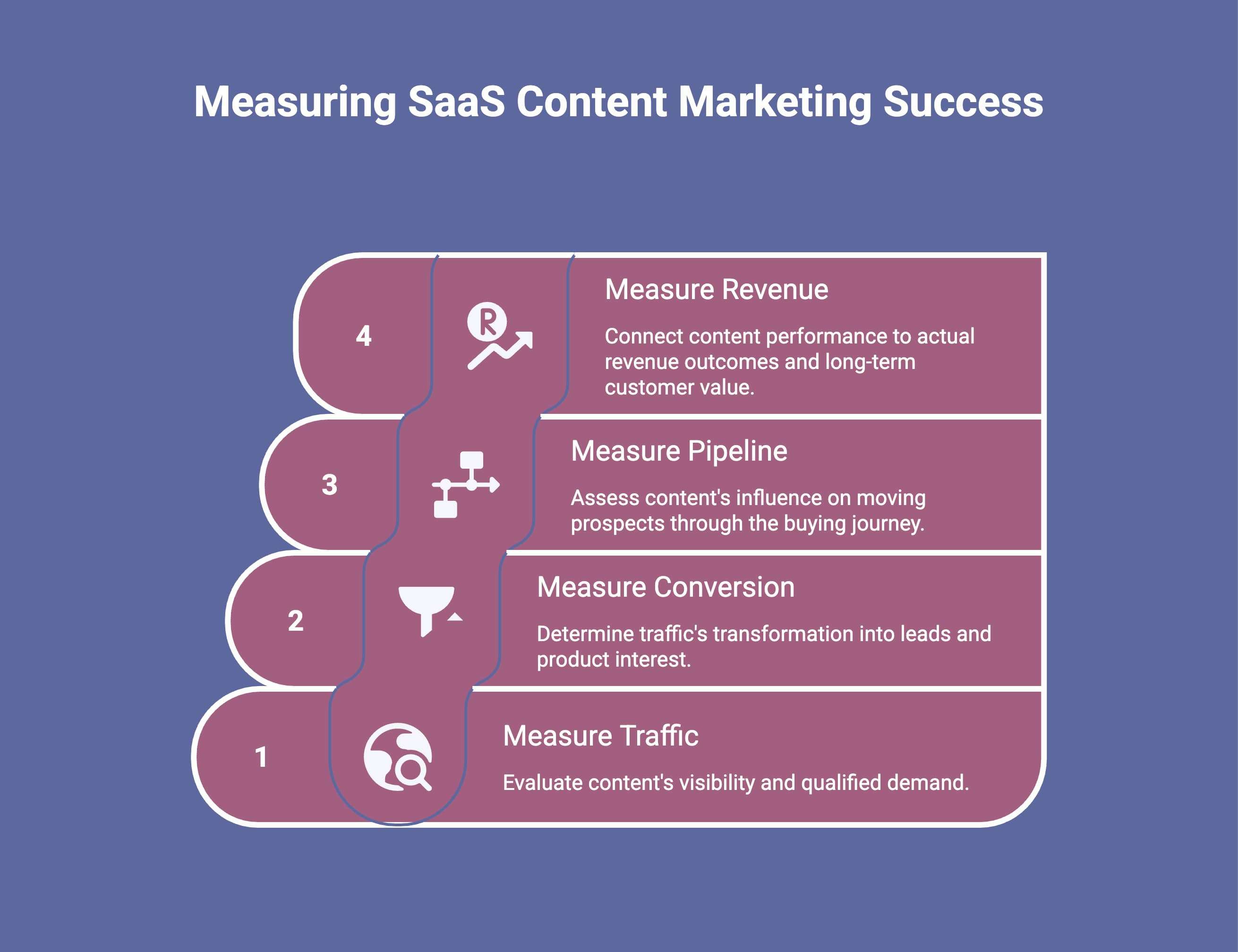
If you do not measure performance, you cannot optimize results. SaaS content marketing should be evaluated as a revenue engine, not just a traffic channel. That means tracking metrics across awareness, conversion, pipeline influence, and long-term customer value.
Follow this step-by-step measurement framework:
Step 1: Measure Traffic and Visibility Performance
Start by evaluating whether your content is generating qualified demand. Traffic alone is not enough. Focus on visibility tied to commercial intent and topic authority.
Track:
- Organic traffic growth from high-intent keyword clusters.
- Keyword rankings across commercial and product-led pages.
- Engagement metrics such as time on page and scroll depth.
- Returning visitors from target segments.
This step helps you understand whether your content is attracting the right audience.
Step 2: Measure Conversion Performance
Next, determine whether traffic is turning into leads and product interest. This step connects visibility to pipeline entry points and reveals whether your content effectively encourages meaningful action from potential buyers.
Track:
- Demo requests generated from organic content pages.
- Free trial signups driven by educational content.
- Lead form submissions from gated resources.
- Click through rates to product and pricing pages.
If conversions are low, optimize CTAs, internal linking, and product alignment within content.
Step 3: Measure Pipeline Influence
Traffic and leads matter, but pipeline contribution matters more. This stage evaluates whether content helps move prospects forward in the buying journey and supports sales conversations in measurable ways.
Track:
- MQL to SQL conversion rates that are influenced by content touchpoints.
- Sales opportunities where prospects engaged with content.
- Assisted conversions across multi-touch attribution models.
This step ensures content is influencing qualified opportunities, not just generating early-stage interest.
Step 4: Measure Revenue and Retention Impact
The final and most critical stage is connecting content performance to actual revenue outcomes and long-term customer value. At this level, you assess whether your content reduces acquisition costs, improves deal quality, supports expansion, and contributes to sustained business growth.
Track:
- Customer acquisition cost relative to content investment.
- Revenue that’s influenced by organic and content-driven channels.
- Customer lifetime value from content-sourced accounts.
- Expansion or upsell activity tied to educational resources.
This confirms whether content contributes to sustainable growth, not just short-term acquisition.
SaaS content marketing becomes powerful when measurement extends beyond traffic dashboards. When you connect visibility to conversion, pipeline, and lifetime value, content shifts from a marketing tactic to a scalable revenue system.
Platforms like Google Analytics and integrated CRM systems help connect traffic behavior to measurable revenue impact.
What Is the Difference Between SaaS Content Strategy and General Content Strategy?
While both approaches rely on content marketing fundamentals, SaaS businesses require a more structured, revenue-aligned system. The table below highlights how SaaS content strategy differs from general content strategy across core focus areas.
Factor
SaaS Content Strategy
General Content Strategy
Primary Goal
Drive pipeline generation, customer acquisition, and expansion revenue
Increase traffic, brand awareness, and audience engagement
SEO Approach
Highly SEO-driven with intent-based keyword mapping across funnel stages
Often traffic-focused without strict funnel alignment
Product Alignment
Deeply product-aligned with feature, use case, and integration content
Loosely connected to products or services
Revenue Focus
Revenue: focused with clear attribution to deals and ARR growth
Engagement-focused with limited revenue tracking
Funnel Coverage
Lifecycle: aware, covering awareness, consideration, decision, onboarding, and expansion
Primarily top-of-funnel blogging
Measurement
Data: measured with pipeline, MQL, SQL, and conversion tracking
Measured mainly through traffic and basic engagement metrics
In SaaS, content is not just publishing; it is a structured growth engine tied directly to pipeline and revenue outcomes.
What Are the Common Mistakes in SaaS Content Marketing?
Many SaaS companies publish content regularly but miss strategic alignment with revenue, product positioning, and buyer intent. When structure, intent mapping, and measurement are missing, content may drive traffic but fail to influence the pipeline or conversions.
Below are the most common mistakes and how to fix them.
1. Writing Only Top of Funnel Awareness Blogs
Many SaaS teams focus heavily on educational, awareness-level blog posts because they are easier to produce and generate traffic quickly. However, relying only on top-of-funnel content limits your ability to attract high-intent prospects who are actively evaluating solutions.
How to fix it: Build full funnel content maps. Balance awareness articles with comparison pages, use case guides, product-led content, integration pages, case studies, and bottom-of-funnel solution-driven assets aligned with buyer decision stages.
2. Ignoring Search Intent Behind Targeted Keywords
SaaS brands often select keywords based on search volume without properly understanding whether users are looking for information, comparisons, pricing details, or direct solutions. This mismatch leads to content that ranks but does not satisfy user expectations or drive meaningful conversions.
How to fix it: Classify keywords by intent before production. Align informational queries with in-depth educational resources, commercial queries with comparison and alternative pages, and transactional queries with product-focused landing pages designed to convert.
3. Not Linking Content Clearly to Product Features
Educational content that avoids mentioning the product may appear unbiased, but it creates a disconnect between value delivery and business growth. When readers cannot clearly see how your software solves the problem discussed, you lose conversion opportunities.
How to fix it: Integrate contextual product mentions, feature walkthroughs, practical use case examples, screenshots, and strategic internal links that naturally guide readers from problem awareness to solution consideration without being overly promotional.
4. Failing to Update High Traffic Content
High-performing blog posts often decline in rankings over time due to outdated statistics, evolving industry standards, or stronger competitor content. Without regular optimization, even strong assets lose visibility and conversion efficiency, weakening your overall organic performance.
How to fix it: Conduct quarterly content audits. Refresh outdated data, expand sections with new insights, improve internal linking, enhance keyword targeting, optimize for featured snippets, and strengthen conversion elements to sustain rankings and revenue impact.
5. Publishing Without Tracking Revenue-Driven Metrics
Many SaaS teams measure success through traffic, impressions, and keyword rankings alone. While useful, these metrics do not reflect business impact. Without connecting content performance to pipeline influence and revenue attribution, decision-making becomes reactive and misaligned.
How to fix it: Track assisted conversions, demo requests, free trial signups, influenced pipeline value, and revenue contribution. Build dashboards that connect organic performance to sales outcomes so content strategy aligns directly with business growth objectives.
Strong SaaS content marketing is strategic, intentional, and performance-driven. It connects search intent to product positioning and ties every piece of content back to measurable business outcomes.
Wondering why modern revenue teams treat enablement as non-negotiable? Read this guide on What Makes Sales Enablement Essential for Modern Teams?
When Should You Consider SaaS Content Marketing Services?
For SaaS companies, investing in content marketing services is a scaling decision, not just a marketing upgrade. It becomes relevant when growth goals outpace internal bandwidth, expertise, or execution systems needed to turn content into measurable pipeline impact.
Many SaaS teams understand content’s importance but struggle with execution. Technical depth, SEO alignment, and revenue integration require specialized systems. Without structure, content becomes inconsistent and disconnected from real growth outcomes.
SaaS teams often struggle because:
- Internal writers lack deep technical product understanding.
- SEO strategy is not integrated early into planning.
- Content is not directly tied to revenue or pipeline goals.
- Publishing lacks consistency, prioritization, and structure.
The right SaaS content marketing service will:
- Build a comprehensive keyword strategy aligned to search intent.
- Create structured topic clusters that strengthen authority.
- Develop conversion-focused assets designed for revenue impact.
- Align messaging tightly with product positioning and differentiation.
- Track performance metrics connected to pipeline growth.
Outsourcing makes sense when internal bandwidth is limited, technical SEO expertise is missing, or aggressive revenue targets demand a scalable, structured content engine.
What Are Some Proven Examples of Successful SaaS Content Marketing Campaigns?
Successful SaaS content marketing campaigns combine SEO visibility, product education, and credibility building to drive measurable business growth. The strongest examples align content with search intent across the funnel and connect organic traffic directly to activation, expansion, and revenue outcomes.
Below are proven examples of brands that have turned content into scalable growth engines.
1. HubSpot’s Inbound Education Engine
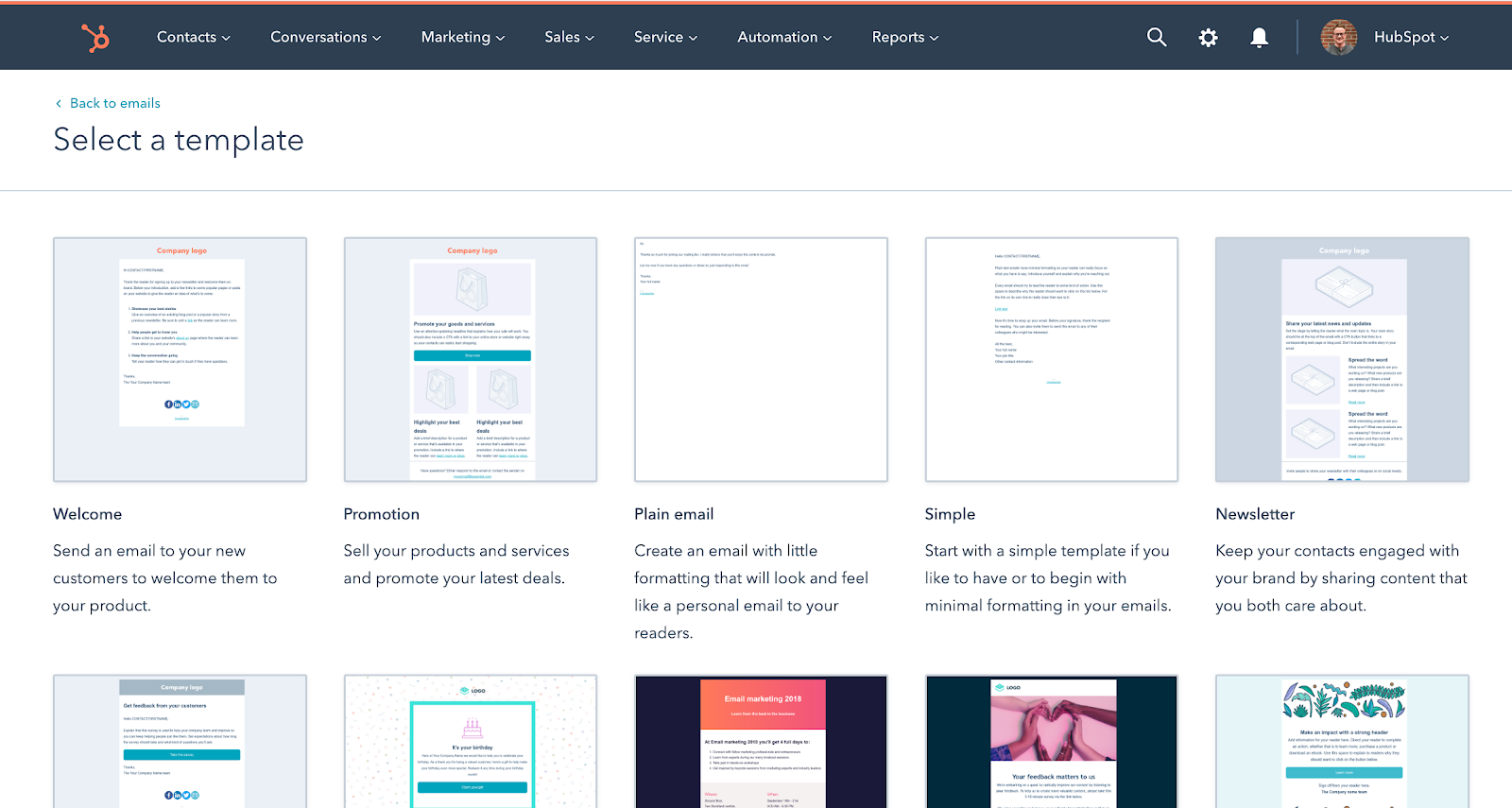
HubSpot built one of the largest content-driven growth engines in SaaS by educating its market before selling to it. Their strategy centered on ranking for high-intent marketing, sales, and CRM keywords through long-form guides, templates, and downloadable resources.
Instead of limiting content to awareness blogs, HubSpot created a full ecosystem that includes free tools, certification courses, email templates, calculators, and gated assets. This approach allows them to:
- Capture top-of-funnel traffic through educational searches.
- Convert visitors into leads via free tools and downloads.
- Nurture users into product demos and free trial signups.
The key to their success is funnel integration. Educational content introduces concepts, free tools create immediate value, and product pages convert engaged users. Content is tightly aligned with product positioning and lifecycle stages.
2. Ahrefs’ SEO Data-Driven Content
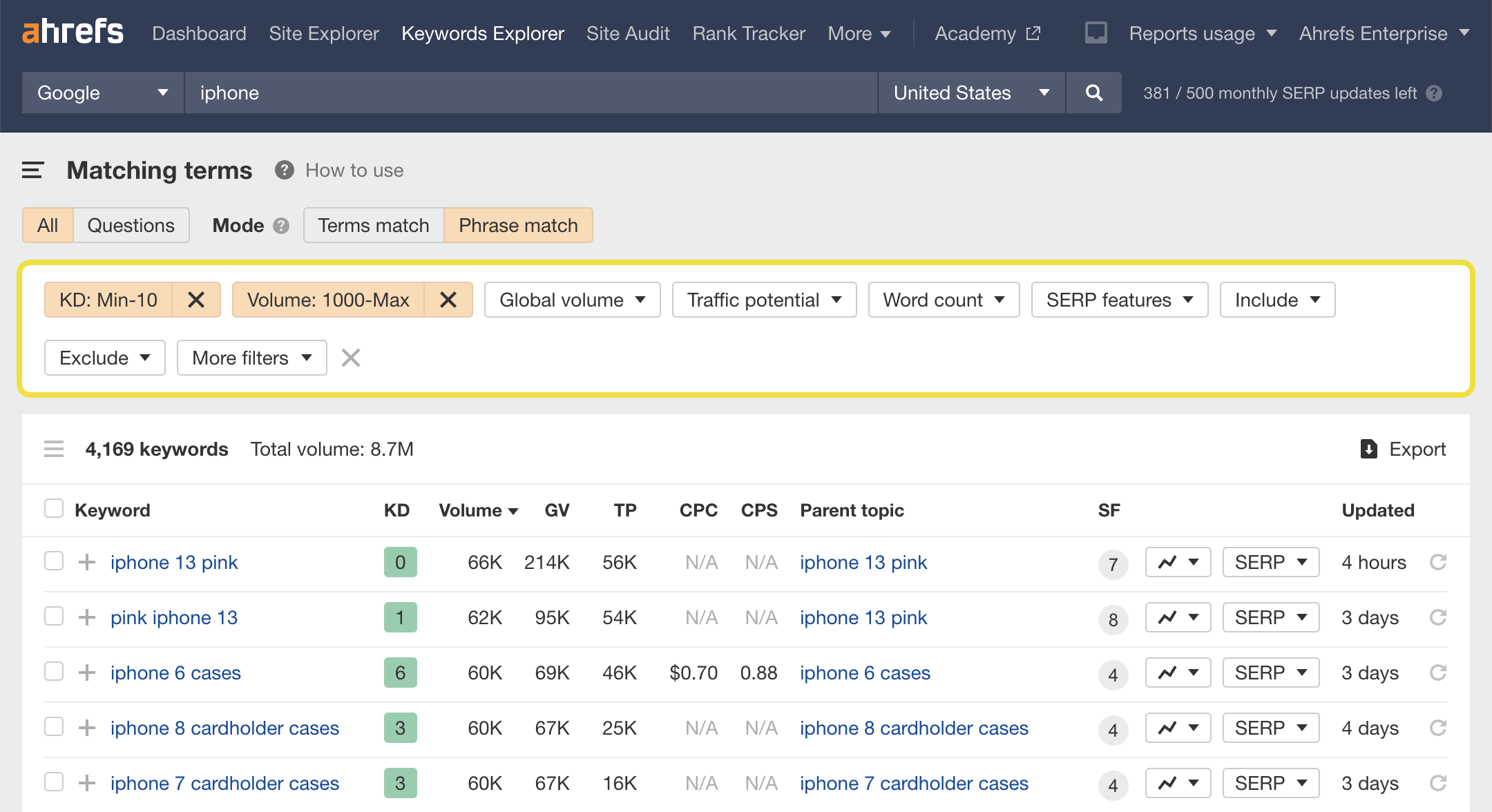
Ahrefs built authority by publishing in-depth SEO tutorials supported by original data studies. Rather than producing surface-level content, they share research-driven insights using proprietary platform data.
Their strategy works because it:
- Targets competitive, high-intent SEO keywords
- Uses real data to differentiate from generic blog posts
- Demonstrates product capabilities within practical tutorials
For example, when explaining keyword research or backlink analysis, Ahrefs integrates screenshots and workflows directly from its platform. This makes content both educational and product-led without feeling promotional.
The result is consistent organic traffic growth, strong domain authority, and a natural conversion pathway from tutorial readers to paid subscribers.
3. Notion’s Product-Led Templates Strategy
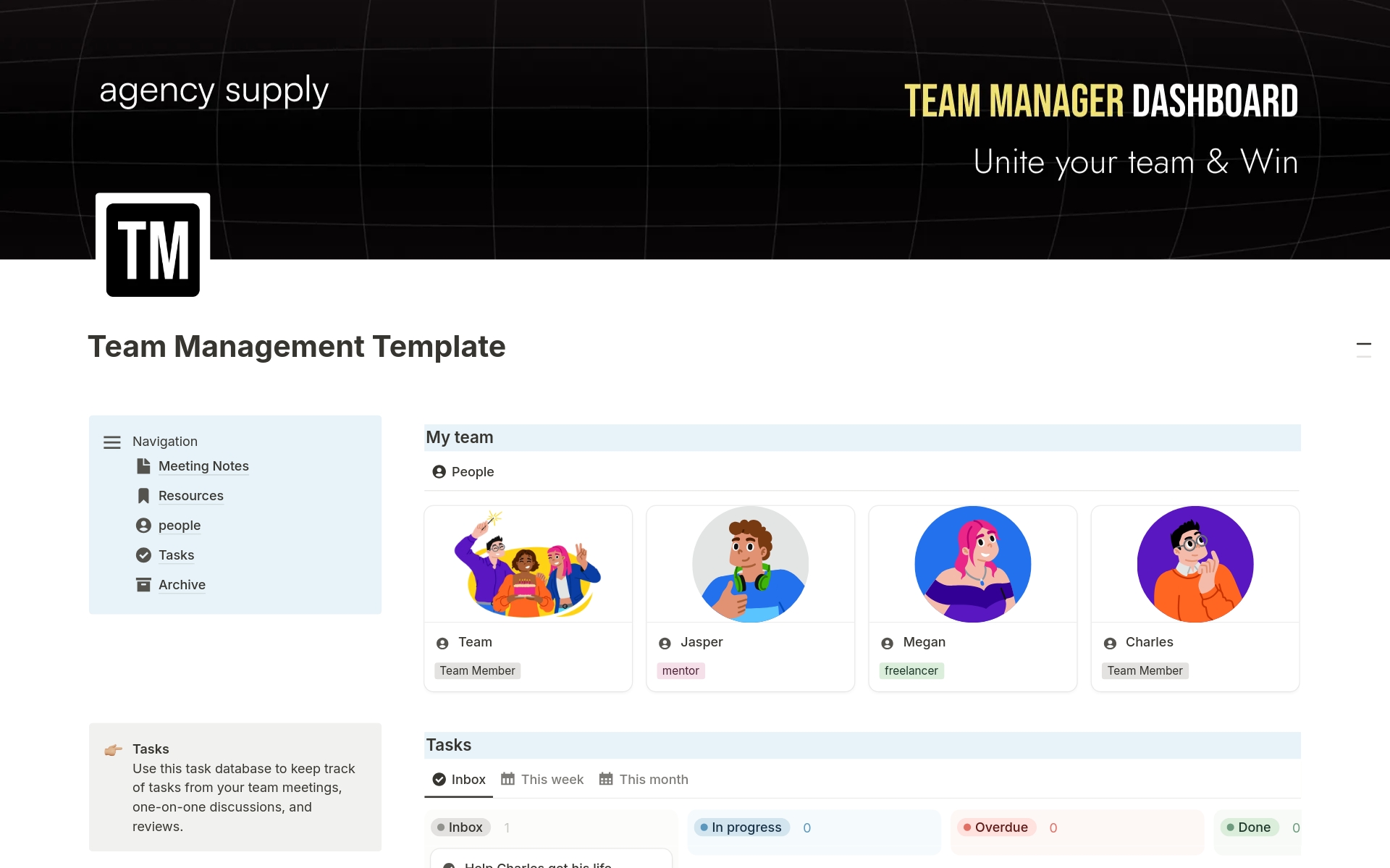
Notion leverages templates and workflow guides as both SEO assets and activation tools. Instead of focusing solely on long blog articles, they built searchable template libraries and use case-driven landing pages.
Their content strategy focuses on:
- Ranking for workflow-based queries, such as project management templates.
- Allowing users to duplicate templates instantly.
- Demonstrating product value through real use cases.
This product-led content reduces friction. Users experience value immediately, which increases activation rates and encourages expansion across teams. The content itself becomes part of the onboarding journey.
4. Slack’s Customer Story Campaigns
Slack strengthened its enterprise credibility through detailed customer success stories. Instead of generic testimonials, they highlight measurable outcomes such as productivity improvements, faster communication cycles, and cost savings.
These case studies work because they:
- Address decision stage objections.
- Provide social proof for enterprise buyers.
- Showcase measurable ROI and real-world results.
For complex buying committees, this type of content reduces perceived risk and builds trust. It directly influences evaluation and procurement decisions.
Why These Campaigns Work?
Each of these examples demonstrates that successful SaaS content marketing is not random blogging. It is structured, intent-driven, and tightly connected to product experience and revenue goals.
These brands succeed because they:
- Map content to the entire customer lifecycle.
- Integrate product education naturally within content.
- Measure success beyond traffic through activation and revenue.
When content functions as a growth system rather than a publishing calendar, it becomes a scalable competitive advantage.
Want to Turn Customer Success Stories Into Your Most Powerful Sales Asset?
Your customers already trust you. The real opportunity is turning their success into persuasive proof that influences new buyers. SaaSpirin creates done-for-you video and written case studies that showcase measurable outcomes, build credibility, and shorten enterprise sales cycles.
With 97% of B2B buyers trusting testimonials, 92% reading reviews before purchasing, and case studies increasing conversions by 34% on average, social proof directly impacts revenue. Since 2020, SaaSpirin has helped 100+ B2B companies worldwide transform customer advocacy into a scalable growth engine.
Ready to let your customers close more deals for you? Book a discovery call today to turn your best customer stories into high-converting sales assets.
Final Thoughts
SaaS content marketing is far more than publishing blog posts on a schedule. It is a structured growth engine designed to attract qualified traffic, educate buyers at every stage, build industry authority, and reduce friction in the sales process. When aligned with product positioning and search intent, content does not just generate visibility; it drives meaningful conversions and supports long-term customer retention.
Whether built internally or supported externally, the objective remains consistent: create value first, content that directly connects to measurable pipeline and revenue outcomes. Executed strategically, SaaS content becomes a scalable acquisition channel and a durable competitive advantage.
Frequently Asked Questions
How does content marketing differ for B2B SaaS businesses compared to other industries?
B2B SaaS focuses on educating a niche target audience within a competitive market. Unlike other sectors, it emphasizes demos, onboarding, and retention across the buyer’s journey. Content must rank in search results, support recurring revenue, and align tightly with product positioning.
What are the biggest challenges SaaS companies face with content marketing?
SaaS brands struggle with consistent content production, balancing project management, and proving ROI. Aligning content efforts with measurable business goals while keeping pace with competitors requires strong coordination, data tracking, and long-term commitment.
What types of content work best for promoting SaaS products?
Educational guides, comparison pages, and product-led tutorials often perform best. A detailed blog post, engaging video content, and data-driven resources generate qualified leads. High-performing formats also nurture prospects from top-of-the-funnel awareness toward deeper evaluation stages.
Are there any free resources or playbooks for SaaS content marketing?
Yes, many SaaS brands publish templates, webinars, and guides sharing best practices. Communities focused on saas marketing often provide frameworks covering keyword research, distribution, and performance tracking, helping teams design effective content marketing systems without heavy upfront investment.
What is the 70 20 10 rule in content?
The 70 20 10 rule suggests dedicating 70% to proven formats, 20% to optimizing high-performing assets, and 10% to experimentation. This ensures strategic content development while testing innovative ideas powered by artificial intelligence or emerging channels.
What is the SaaS content strategy?
A SaaS content strategy connects seo, education, and product value. It maps each piece of content to the customer journey, delivering valuable insights that address pain points while guiding prospects toward conversion and long-term adoption.
What is the 10x rule for SaaS?
The 10x rule focuses on creating the best content that is ten times more useful than competitors. By delivering actionable insights, building thought leadership, and publishing truly great content, SaaS brands strengthen differentiation and authority in crowded markets.
How can a SaaS startup get started with content marketing from scratch?
Startups should begin with focused content creation aligned to core problems. Publishing one high-quality piece of content weekly, supporting it with email marketing, and sharing via social media builds brand awareness while attracting early traction and engagement.
What should I look for in a SaaS content marketing agency?
Look for an agency that understands product-led growth and integrates marketing with the sales team and customer success. They should demonstrate proven lead generation, prioritize user experience, and align measurable outcomes with long-term retention and expansion goals.
What is the most effective content marketing strategy for SaaS companies in 2026?
The most effective SaaS content marketing strategy in 2026 combines product-led education, AI-driven personalization, and high-intent SEO. It aligns content with revenue goals, supports the full buyer journey, leverages customer proof, and continuously optimizes performance to drive sustainable, compounding growth.